Plitvicka Jezera
From Pula we headed inland to an area of extreme beauty called Plitvicka Jezera home to the Plitvice Lakes National Park. We found a lovely campsite nestled in amongst the hill and forest, just down the road from the entrances of the National Park. The site had spacious pitches sculptured and scattered across the large area, amongst the trees with stunning views across the hills and mountains.
We spent 3 days exploring and hiking the Plitvice Lakes National Park, a well worth place to visit and highly recommended.
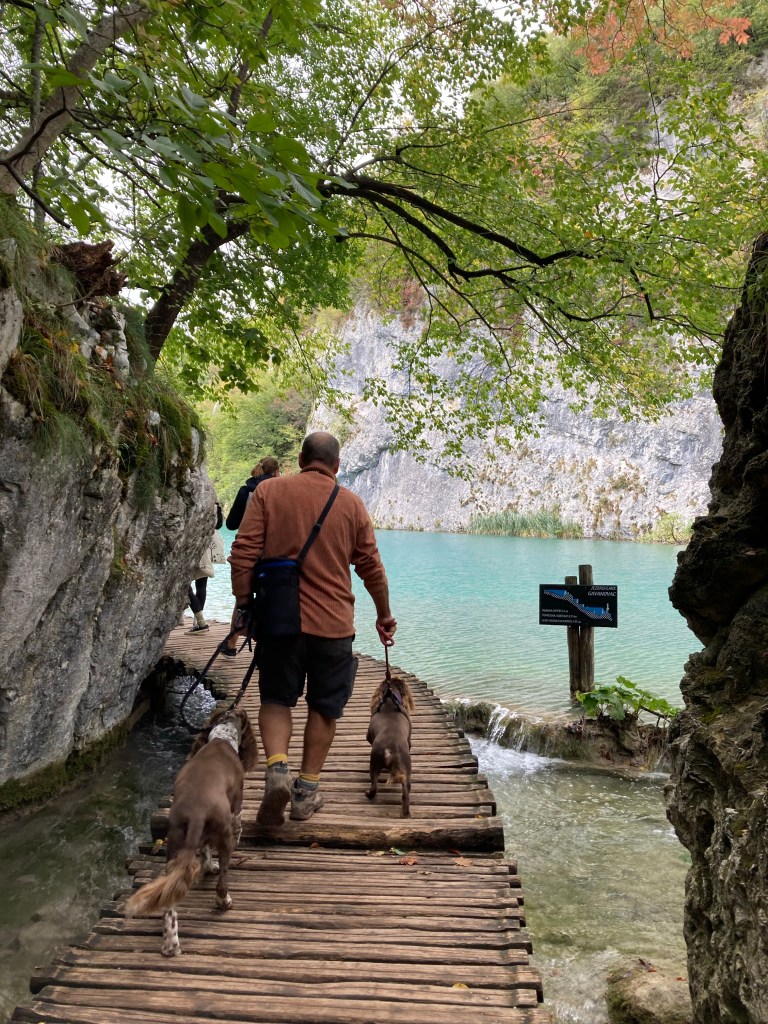
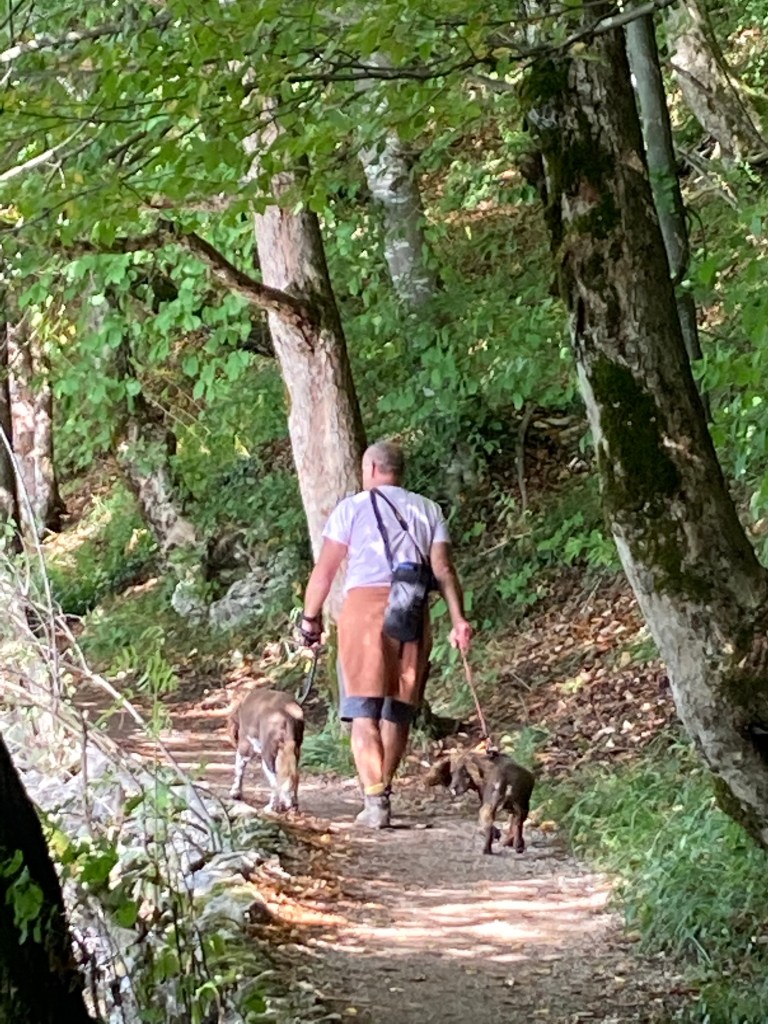
Unfortunately, dogs are not allowed on the transfer bus from the campsite to the Park. Therefore, we had to take our camper van the few miles up the road to the National Park. Not really an issue as we are quite competent packing up the van now and left all the outdoor equipment, chairs, table, cooking etc on our pitch. 10 minutes later we were on our way. Parking is easy with designated areas for motor homes and vans. Cost was reasonable, can’t remember how much, but nothing too extravagant.
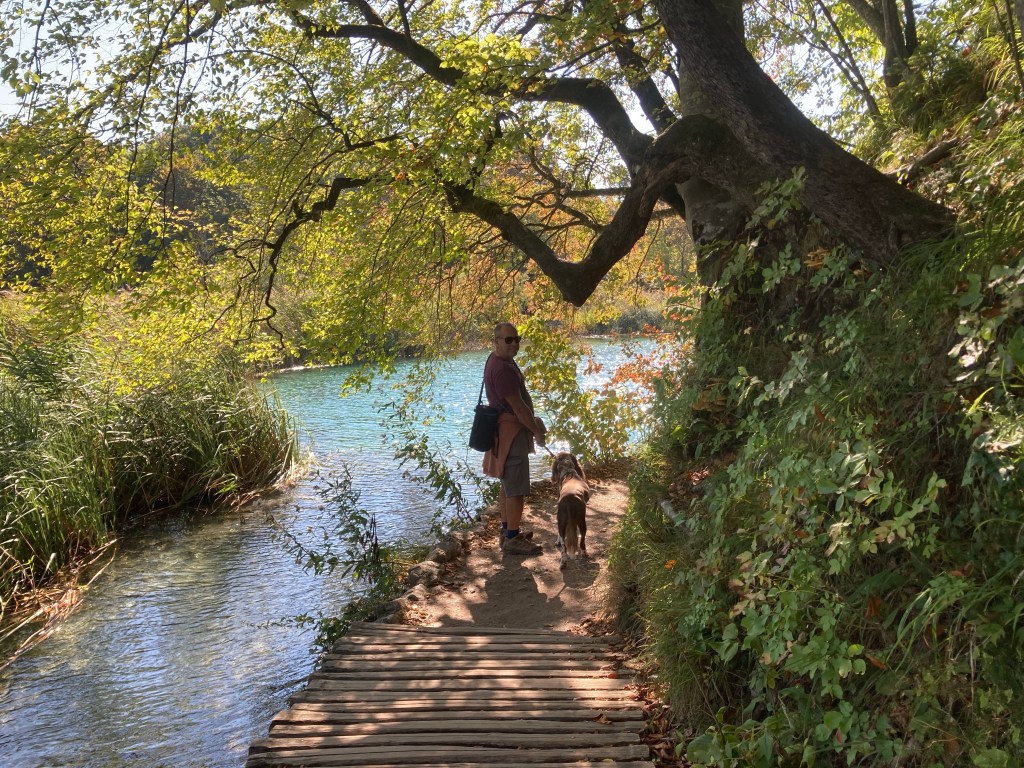
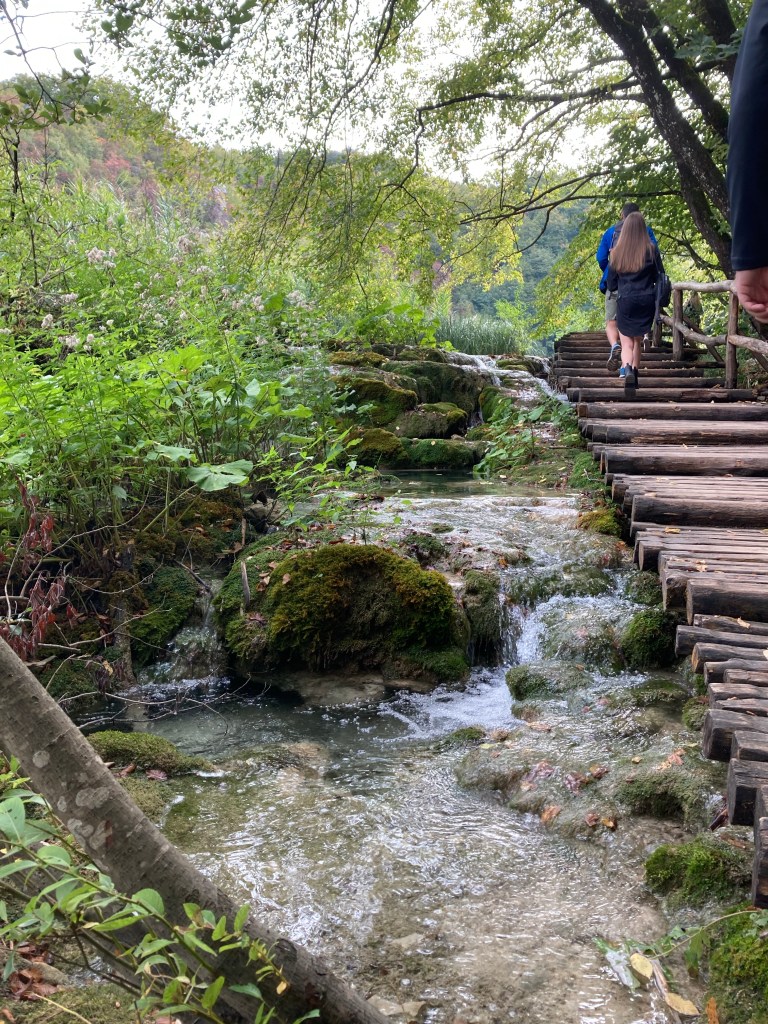
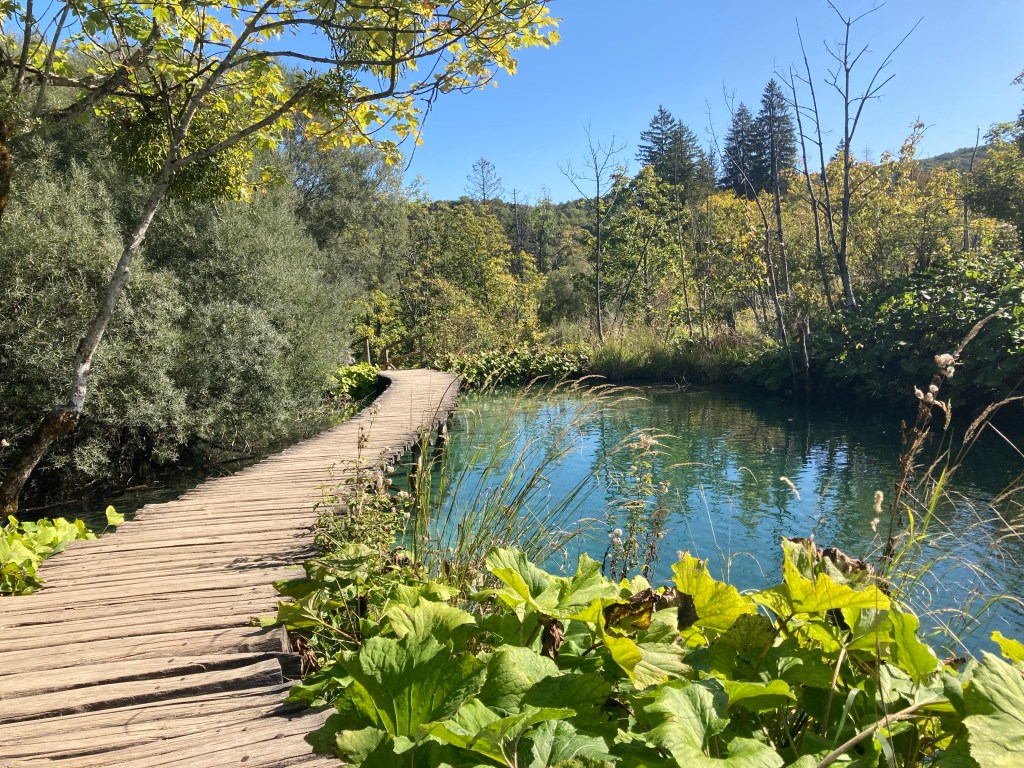
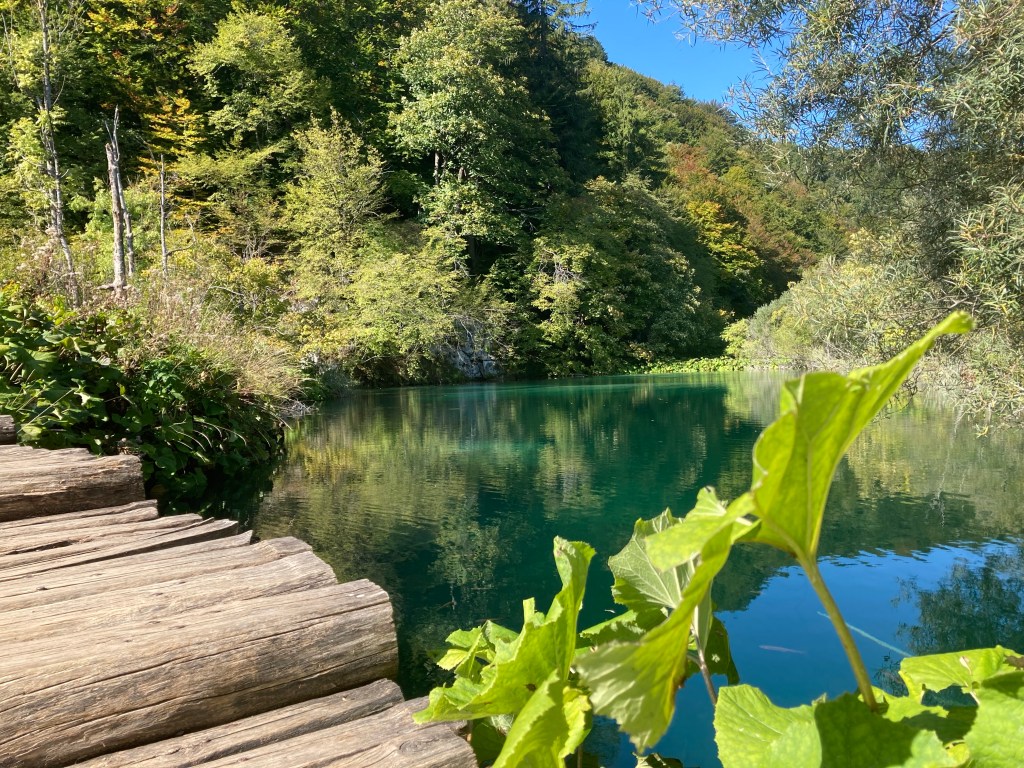
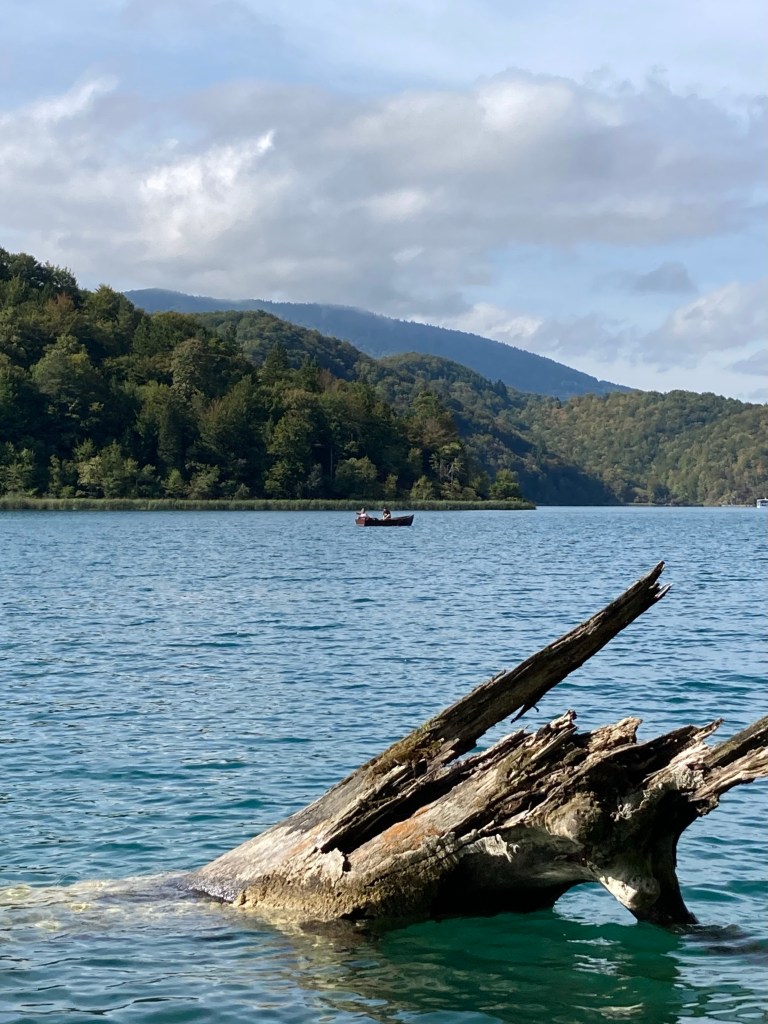
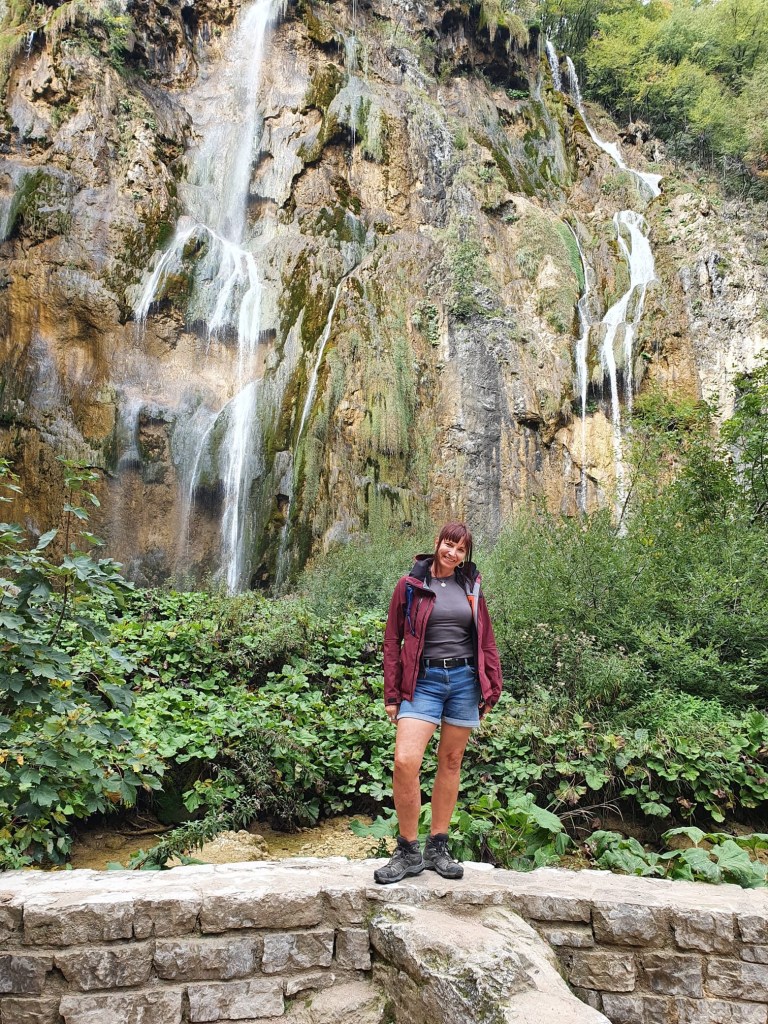
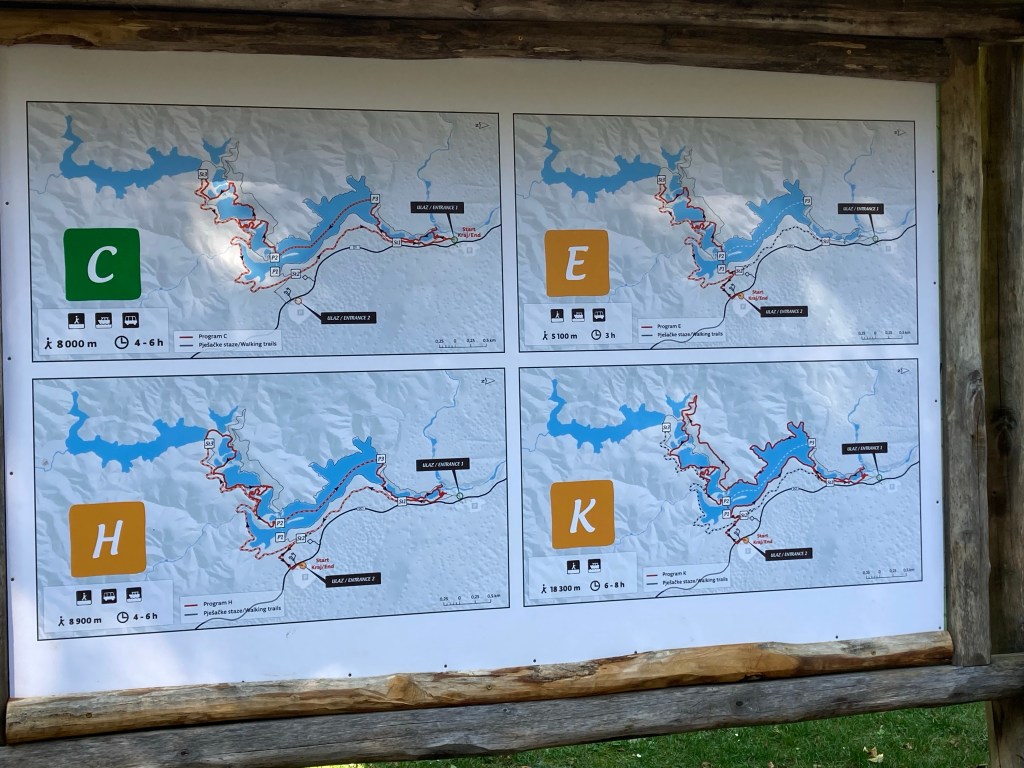
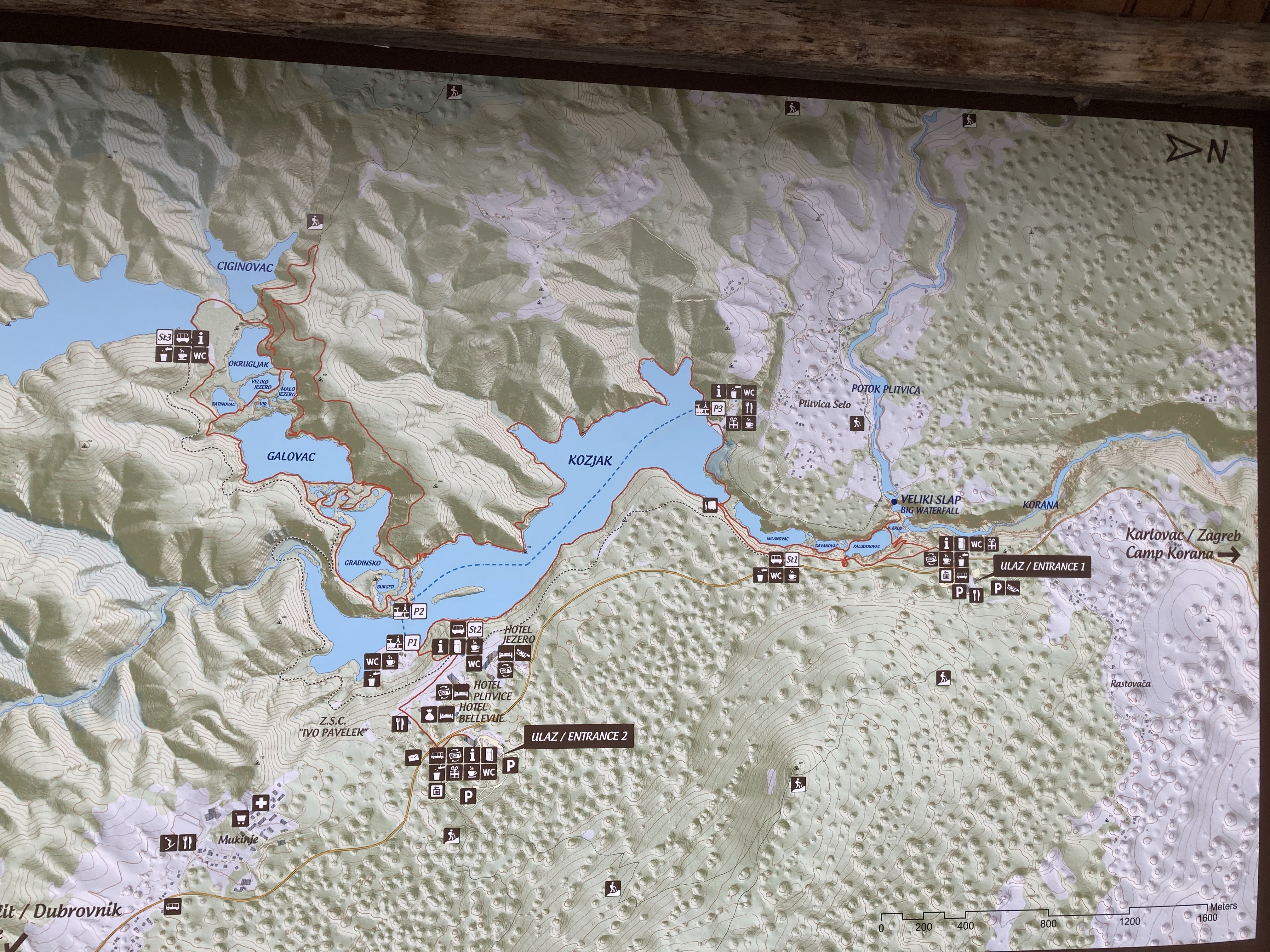
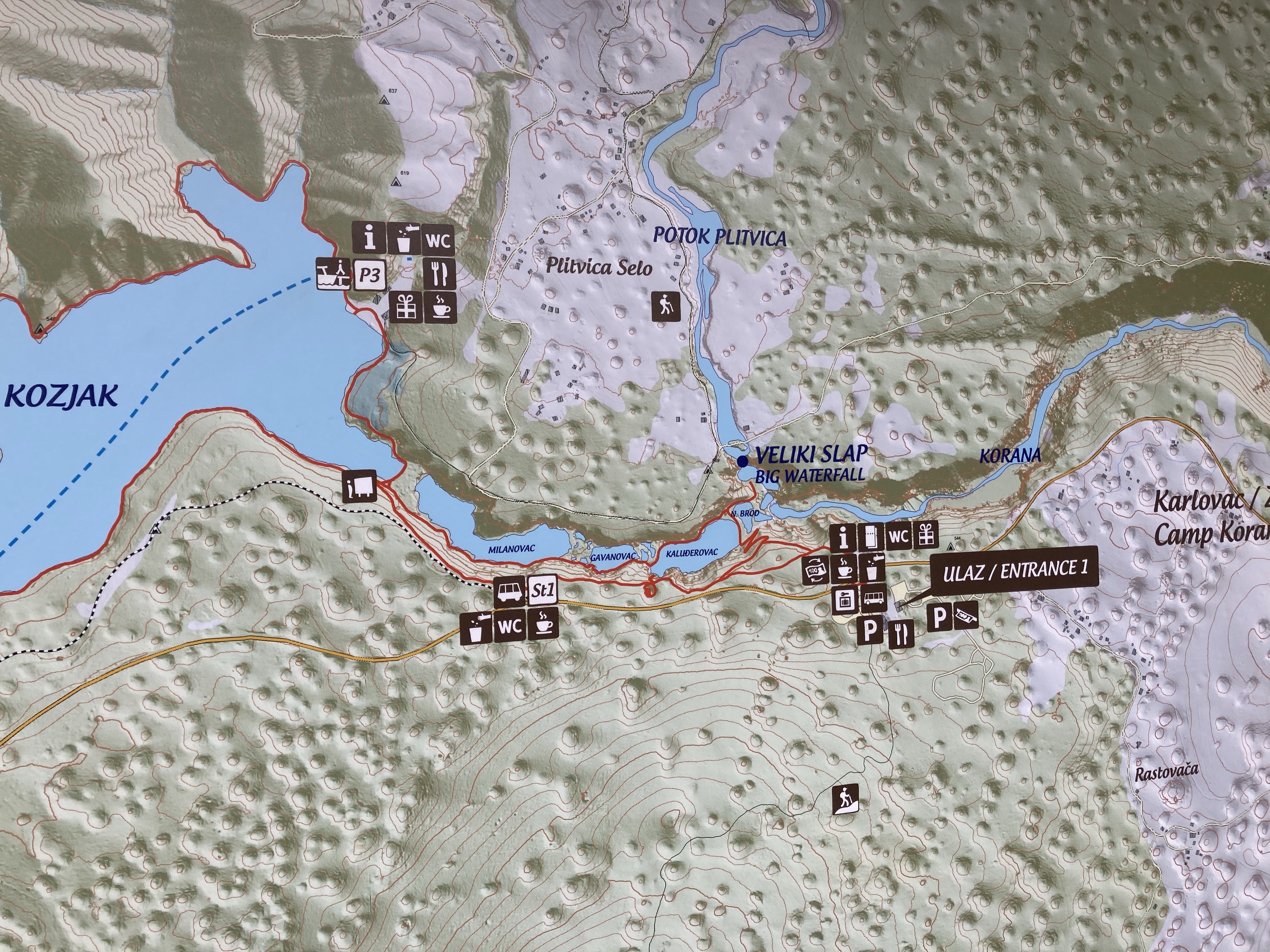
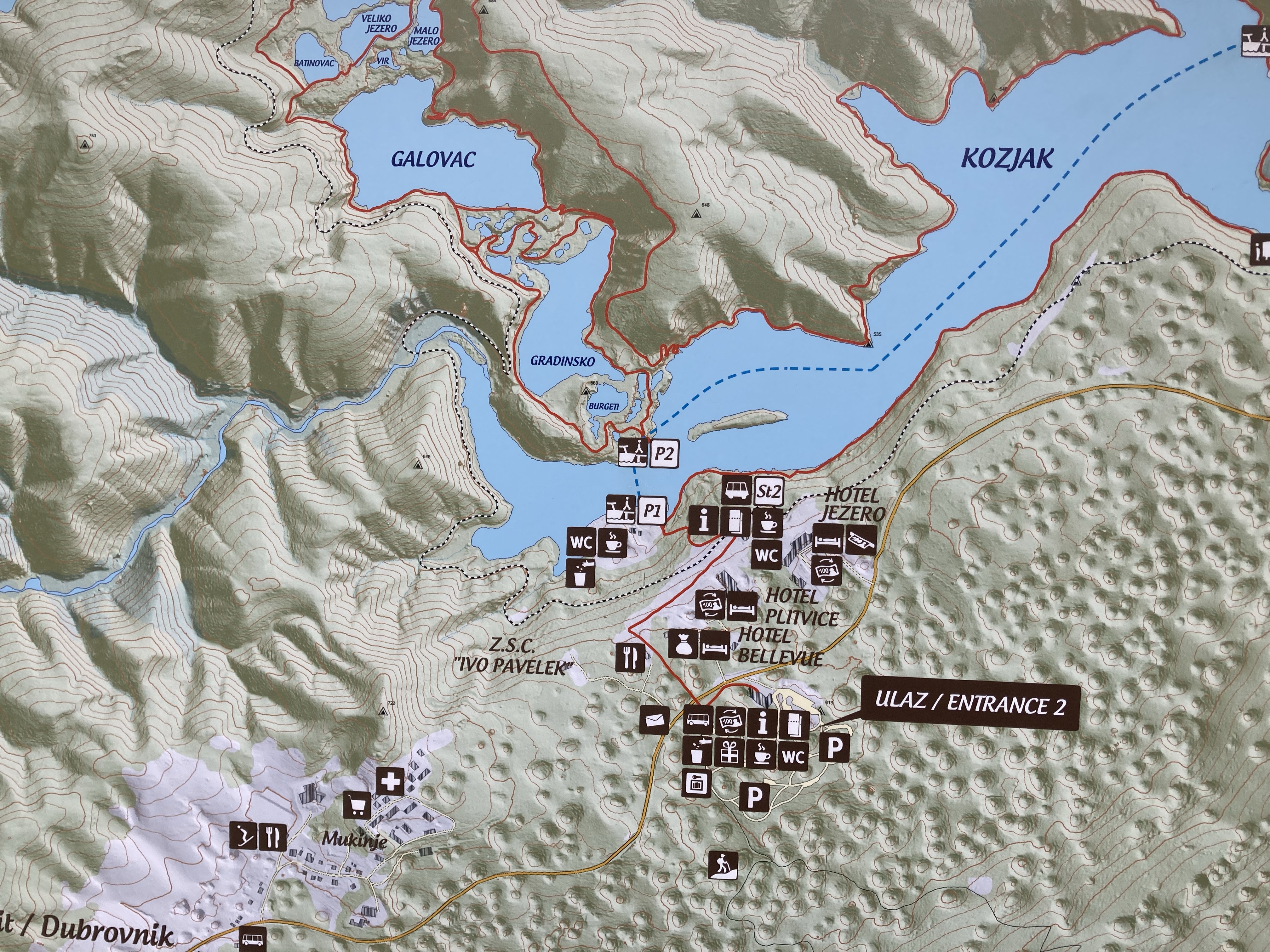
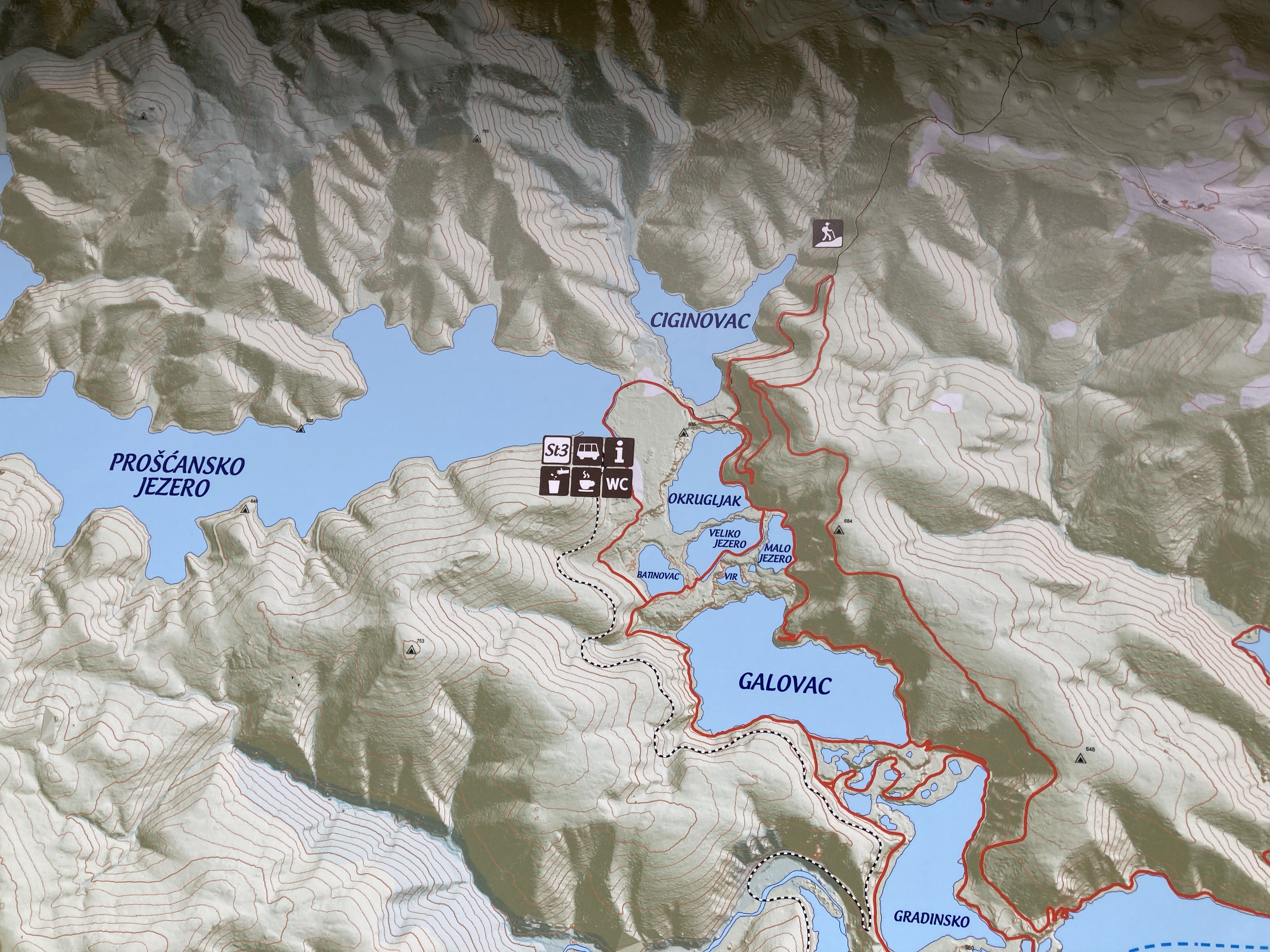
The Plitvice Lakes have walking hiking trails ranging between 3km to 18km. Most routes include the Veliki Slap waterfall and the Sastavci Lower Lakes and some include a boat trip across the Kozjak lake. There are seven different routes, trails A,B,C,E,F,H,K. I would recommend entrance 1 for the shorter hikes and the easiest way to see the stunning Veliki Slap waterfall. The longer routes start from Entrance 2 and include the Upper Lakes and the Veliki Prstavac waterfall and Trail K is the longest which is around the whole park. The trails are well laid out, clear signage (so you can’t get lost), with well-constructed and maintained walkways and bridges. Hiking along the trails is an easy and fantastic way to explore the scenery and sheer beauty of the national park.
I would recommend buying your tickets in advance as they do limit the number of people admitted in a day and you don’t want to make the effort to get there and then not be allowed in. There is a café at the entrance along with toilets. We turned up at around 9:30 however this is a busy time with coaches arriving. I would therefore recommend leaving it a little later to allow the crowds of noisy large groups, of not that interested teenagers, to get out of your way so you can really enjoy the views, scenery and landscape in your own quiet time.
There is a lovely area in the middle of the National Park that has a variety of eating establishments and facilities. A good place to rest, eat and drink before continuing onto which ever route you desire.
Although it was really easy to leave our pitch (leaving our outdoor equipment clearly marking our reserved area) it was really annoying, upon our return, we had a van park literally next to us. Bearing in mind we were out of season everyone else were well spaced out across the site, respecting each other’s privacy.
They blocked our easy entrance into our pitch, forcing us to have to negotiate multiple turns to get in and were less than one meter from our van, with all the space on this site it was totally unnecessary. Having asked them, very nicely, to consider moving to another pitch they flatly refused and stayed put! We took the moral high ground and really wanting our privacy and space we upped and moved to another area. We did contemplate revenge! However, withheld our desire and enjoyed the rest of our stay in another quite area amongst the trees with a good view.
Below are some interesting facts, worth a read:
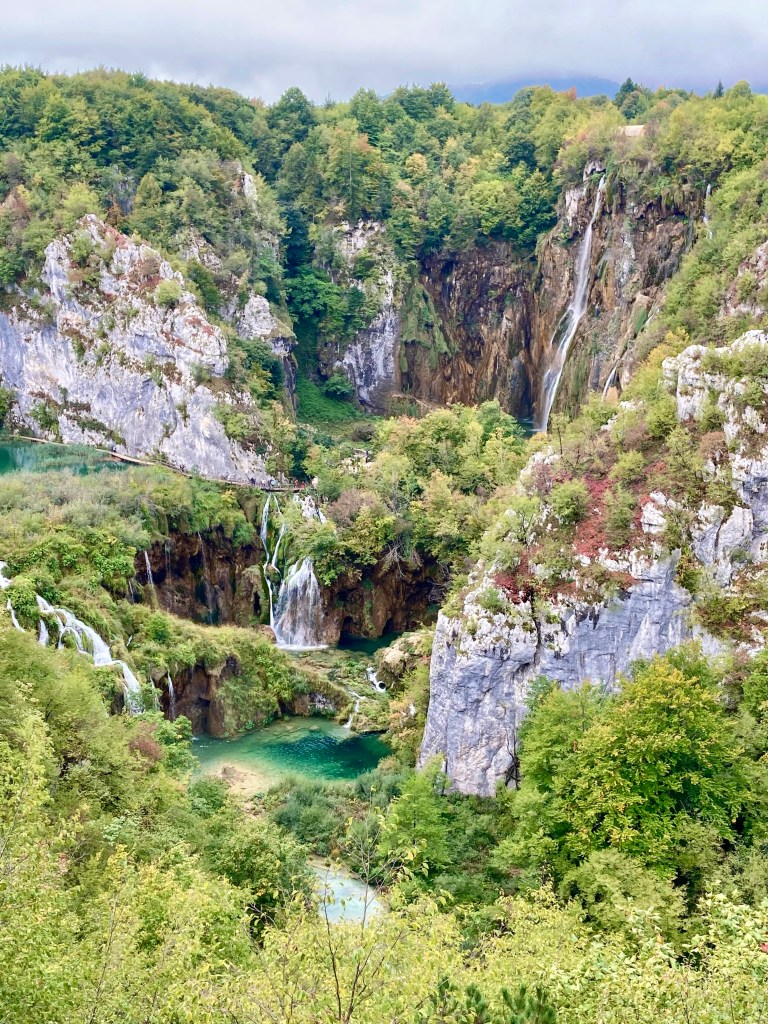
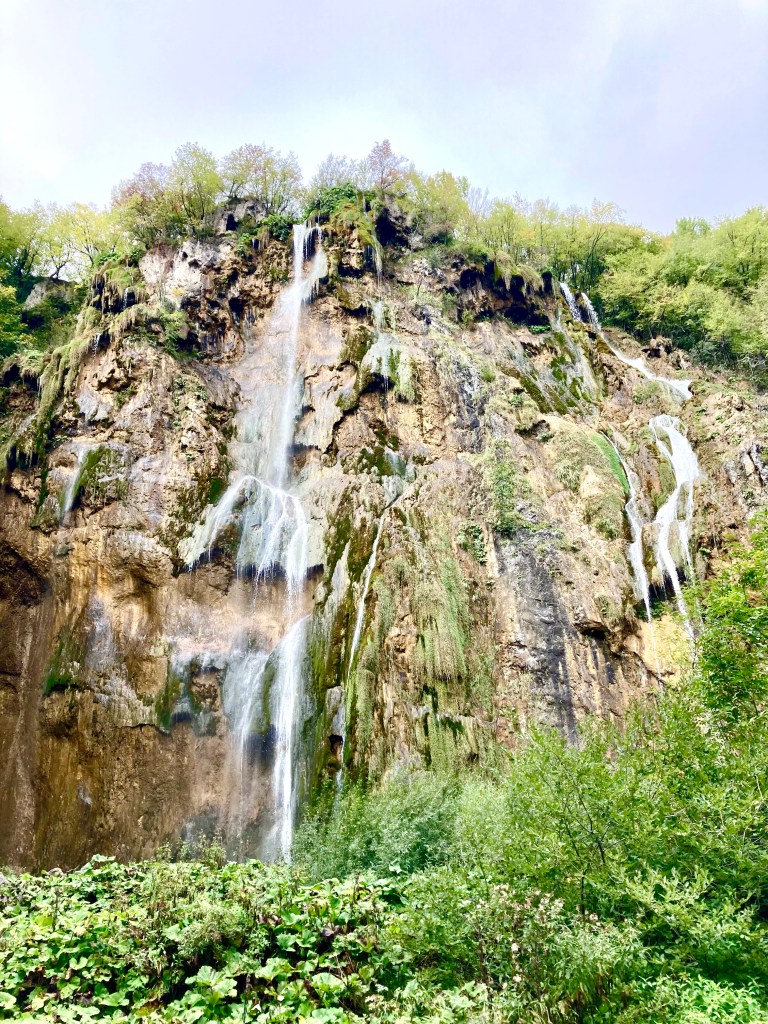
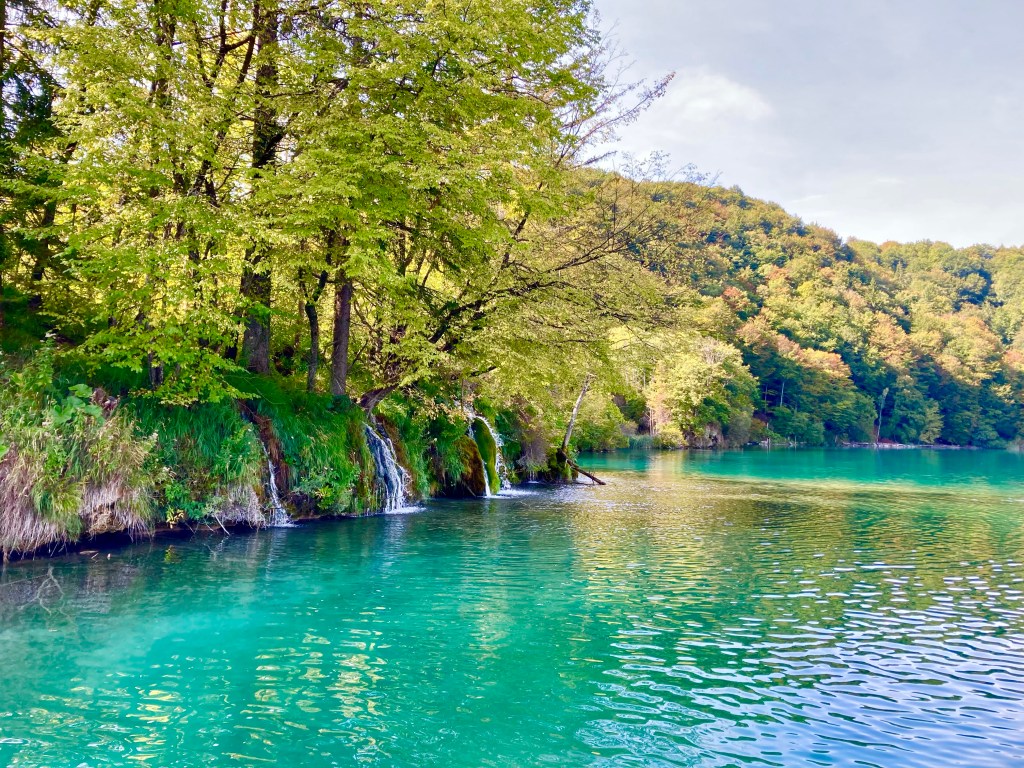
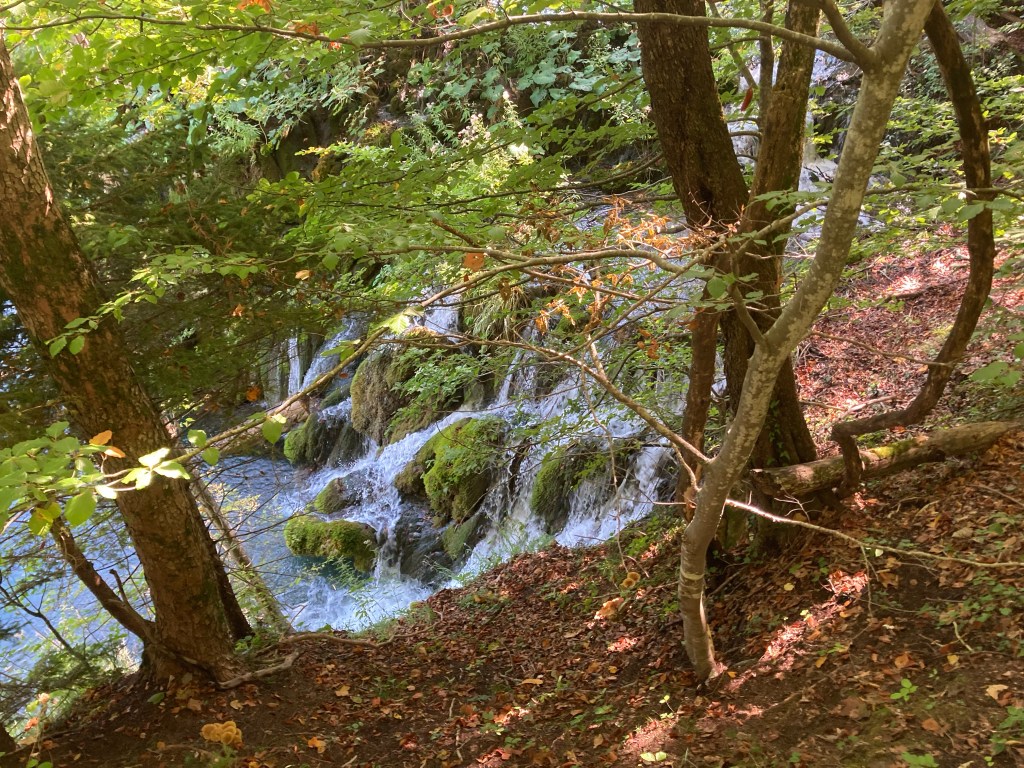
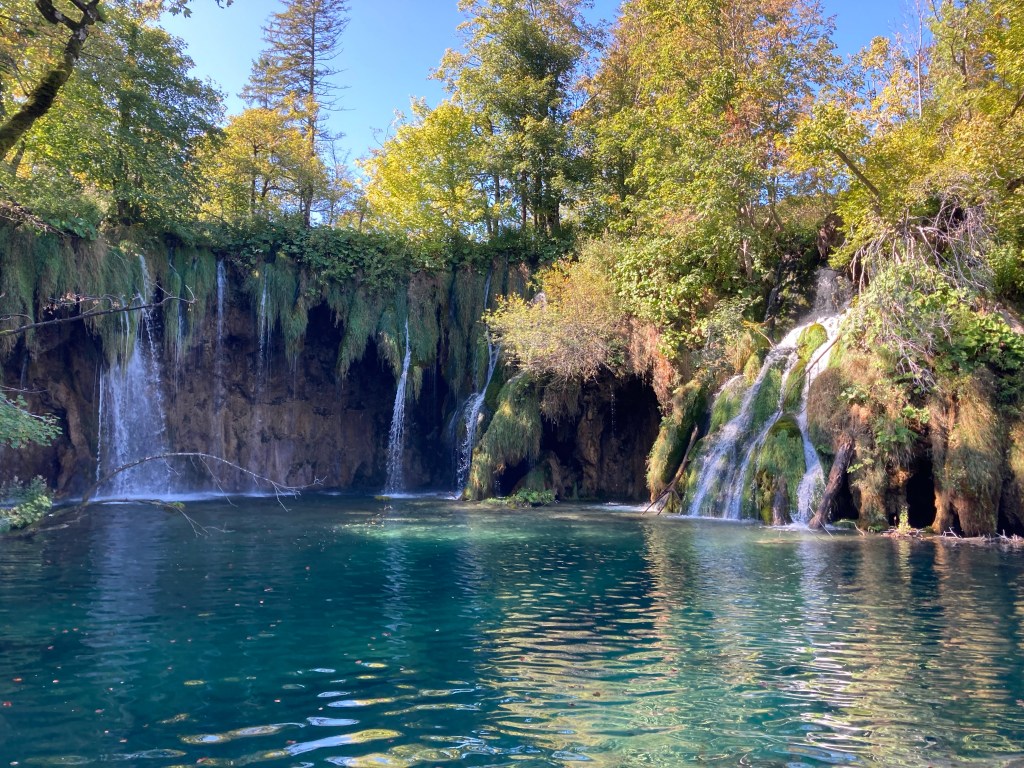
Plitvice Lakes National Park is 295 sq km forest reserve in central Croatia. Known for its chain of 16 terraced lakes and caves joined by spectacular waterfalls which extend and lead into a limestone canyon. Walkways and hiking trails wind around and across the water and electric boats link the 12 upper and 4 lower lakes. The largest and most dramatic waterfall is the Veliki Slap, gushing over a magnificent terrain drop to the first lake at its foot of 62m stretching across to the beginning of the Korana River a drop of 87m. The maximum measured average flow of this waterfall is greater than 4000 L/s with the minimum flow less than 80 L/s when frozen.
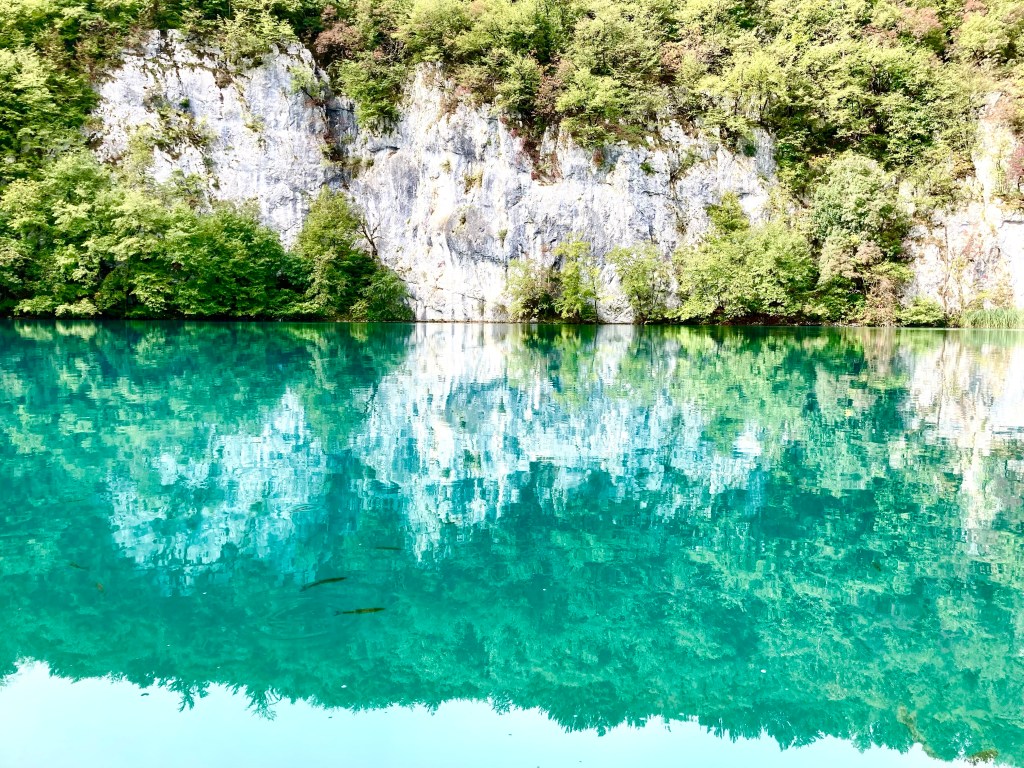
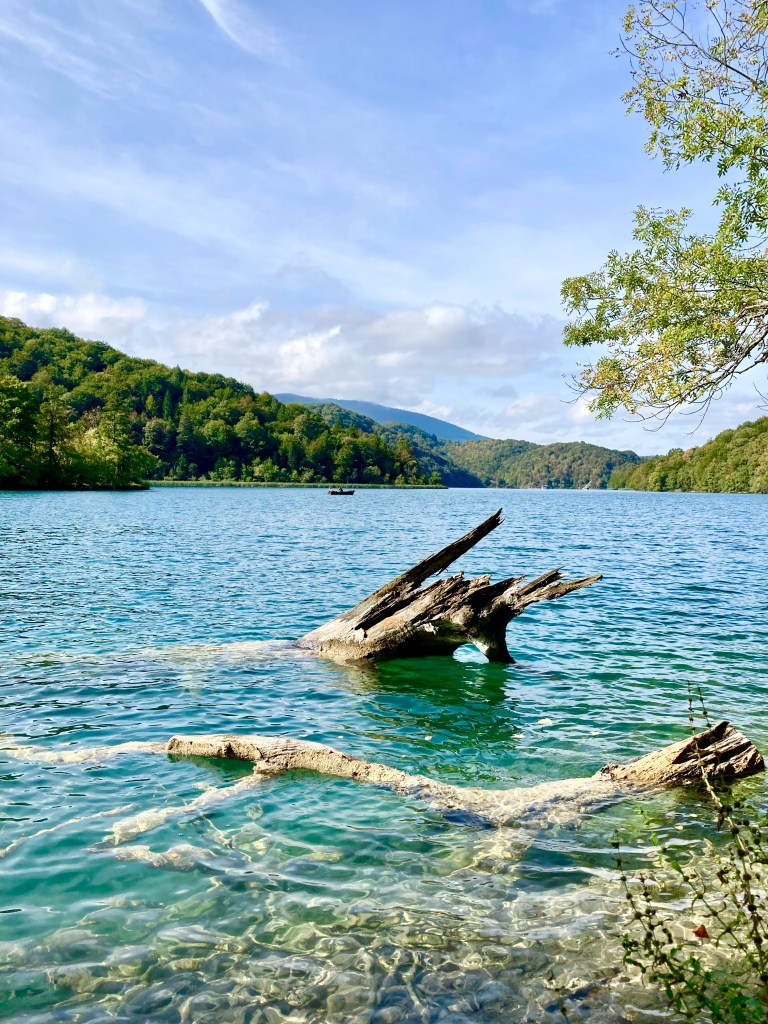
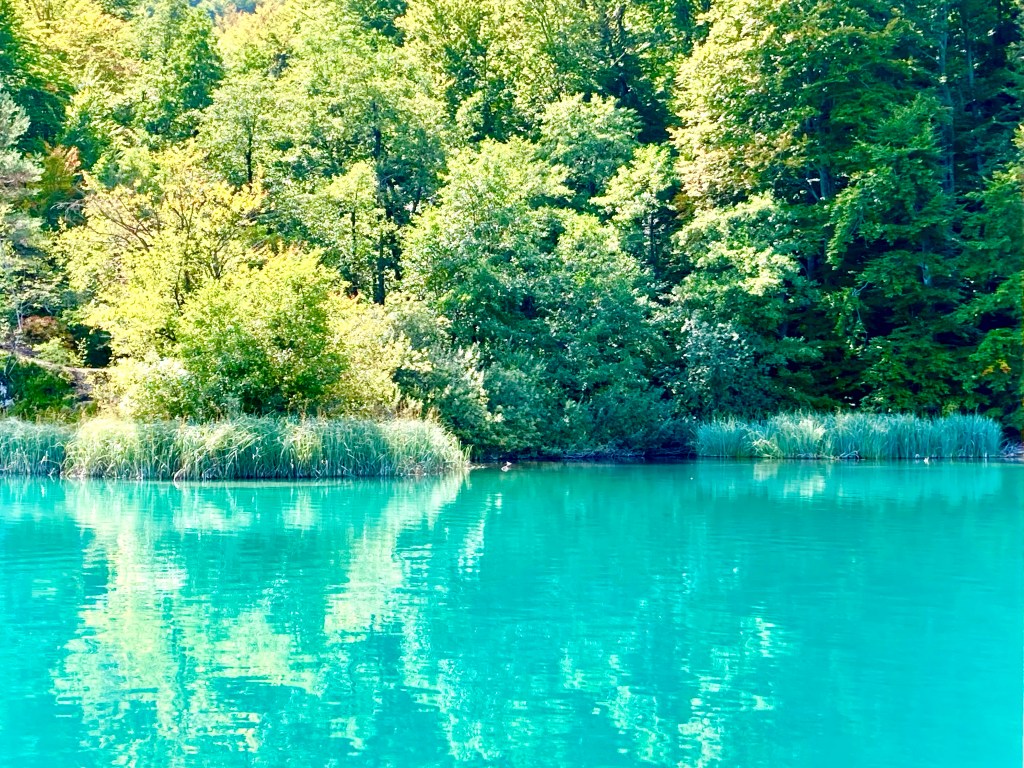
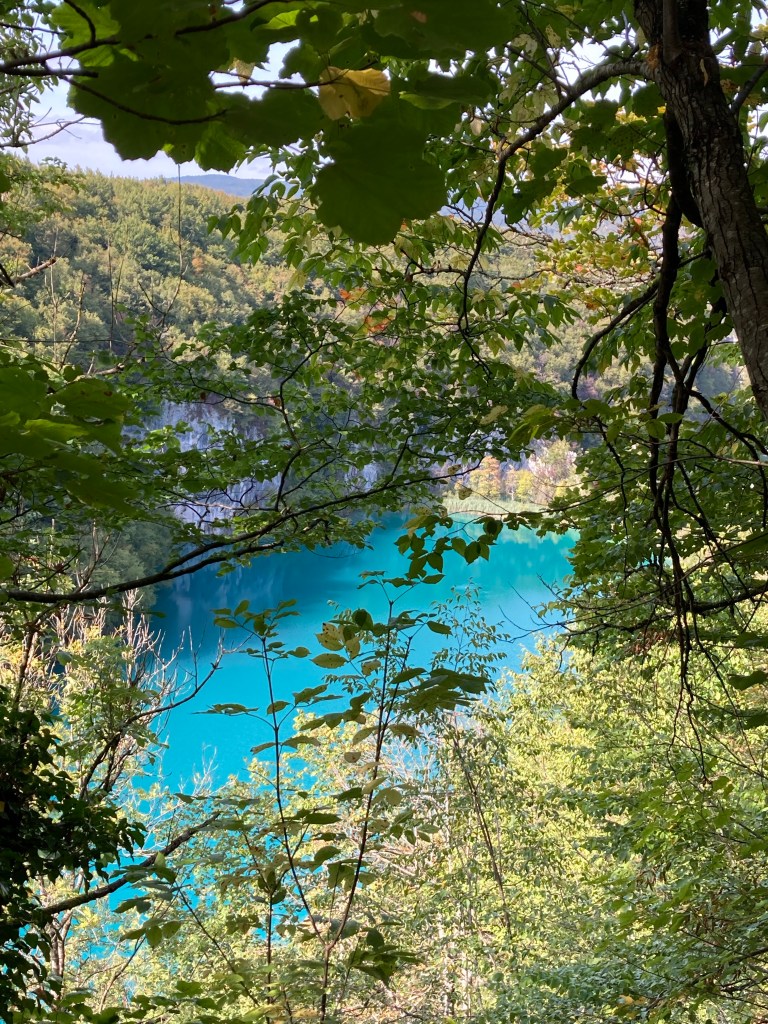
The lakes have a surreal clarity due to the limestone minerals and organisms and a vibrant range of colour from azure, green, grey and blue, dependent upon the angle of the sunlight. The cascade of lakes is a result of the confluence of several small rivers separated by natural dams called travertines.
Travertines are made from a combination of water, air and plants. Created from deposits of limestone (calcium carbonate) creating barriers, thresholds, dams and cones that are encrusted with moss and algae. The Travertines continue to grow and evolve (3mm per year), giving the landscape its magnificence, we are privileged to see today from the 1000’s of years growth, to future evolution generations will see in the future.
 Travel adventures