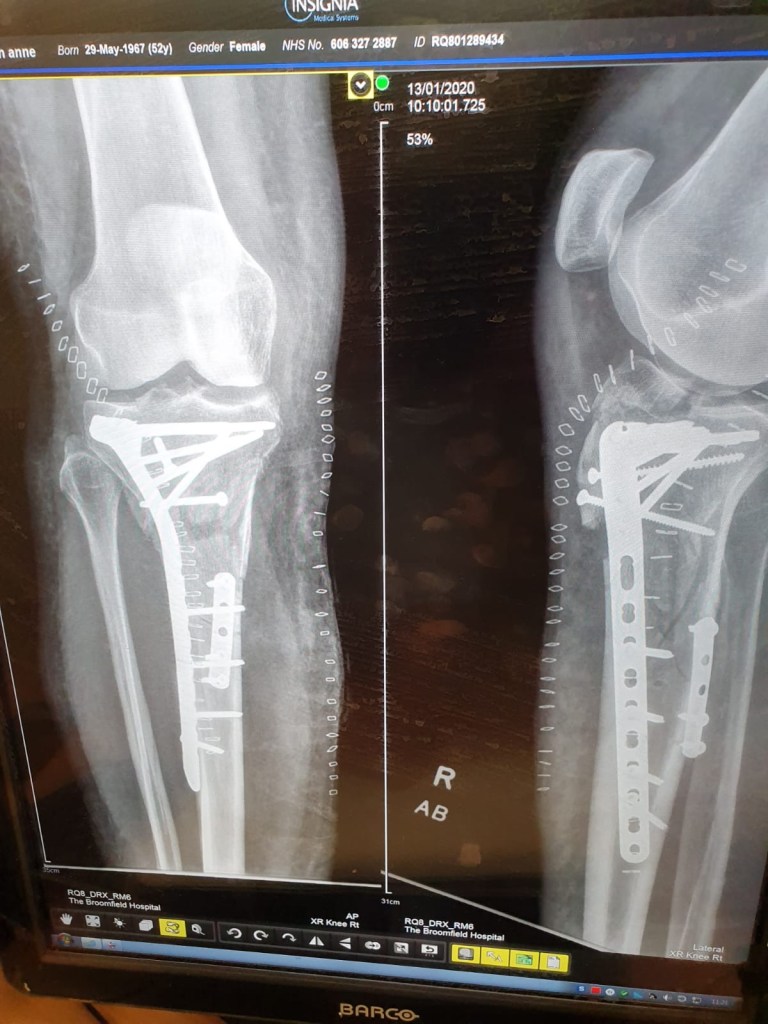
I am writing this section as I had a serious ski accident and shattered my right Tibia. With two plates and multiple pins I started my rehab journey.
Advice and assistance were seriously lacking due to high demand on the NHS, Covid striking, the result of which, my consultations stopped and my private physio sessions were cancelled. So, my rehab was down to me!!
First thing to make sure you do is always keep moving and concentrate on your posture right from the beginning.
Point 1
Keep your ankles moving and make sure you stretch out your achilles tendon. These will naturally shorten if you don’t use them.
Point 2
Always keep your posture straight. Sit up with equal weight on both hips. When using your crutches make sure they are at the correct height and always stand straight, don’t hunch or slouch over and walk through a full walking motion, especially when you can partially load bear.
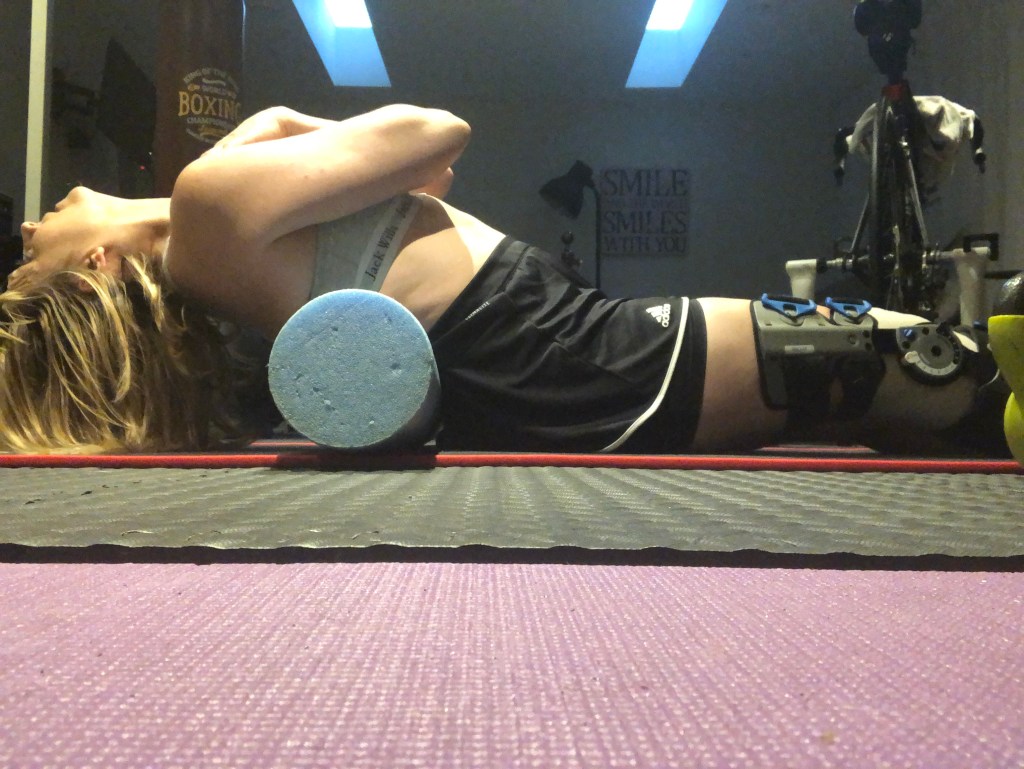
I did yoga from the start and adapted the poses around having a broken leg. This will keep your flexibility and will assist with stretching out all your muscles and tendons. Yes, you can still do it (although maybe check with your consultant)
Point 3
Be determined not to walk with a limp. If you have had plates and screws, then your leg/bone is strong! The most useful advice I was given is to treat the leg as normal, once it is fixed, your consultant will let you know when, to disassociate yourself from the injury, ie stop thinking about it and overprotecting it. You will find there is actually no need to walk with a limp and it is just a case of not doing it. Throw away your crutches and/or stick as soon as you can and start walking properly.
Do your rehab exercises religiously and note that this is probably for the rest of your life as keeping the affected area strong and mobile is critical to how you progress with it long term.
Point 4
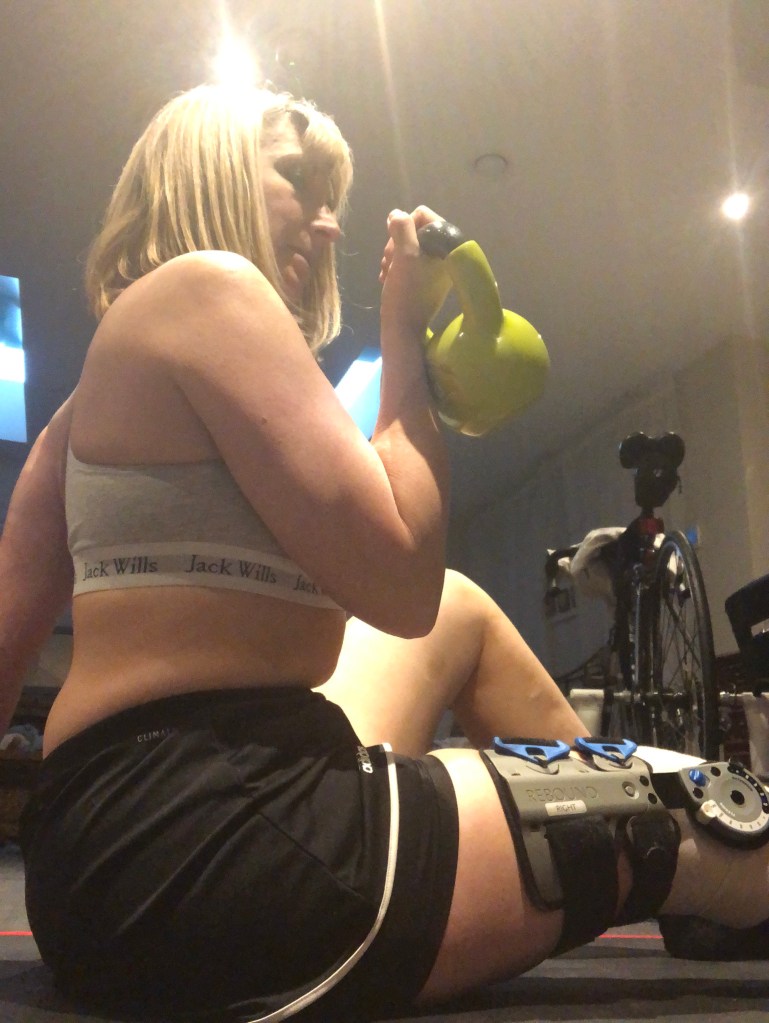
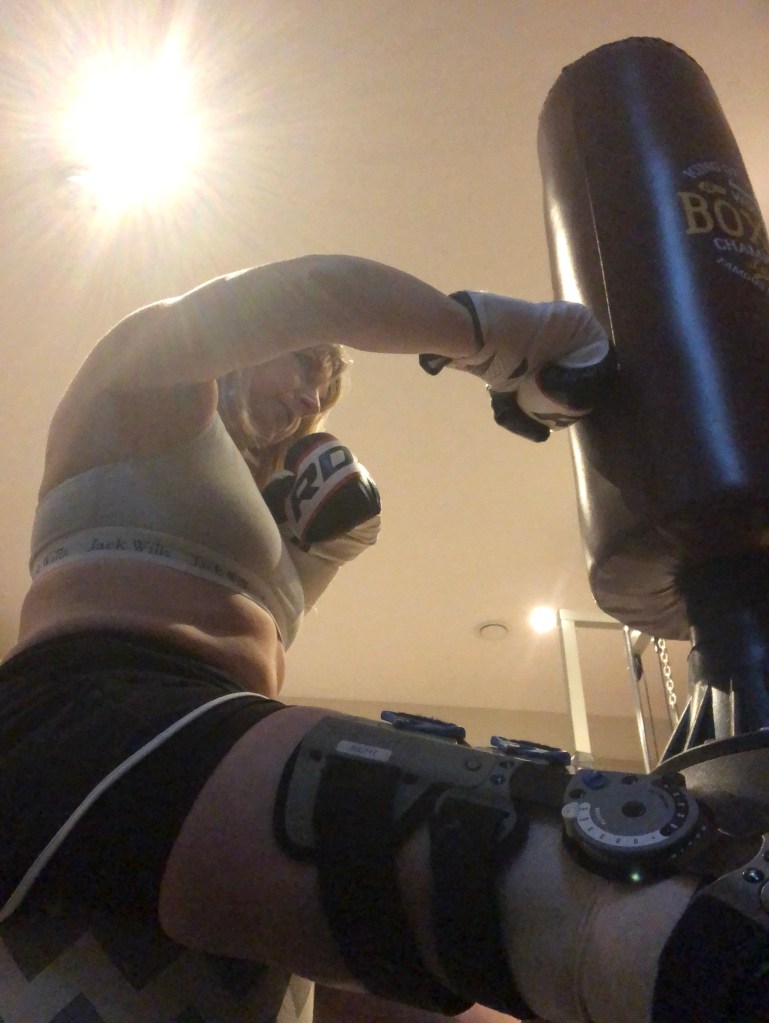
You can return to full activity if you are determined. This may not be to the standard you once were however you can get close. Although I am not back to running yet, I have taken up cycling and do this to a good amateur standard. I also used HIIT to build up the muscles in my leg and I concentrate on equal weight distribution and full movements with the correct posture. Yoga has helped from the start and is an excellent way to increase the flexibility and strength around the area of damage and also for your body as a whole.
I am still conscious of my injury as the leg is numb where it became degloved and I sustained nerve damage, it takes a very long time for the nerves to repair (over a year). When doing exercise, I have to remind myself to use the damaged leg correctly and to stop overcompensating with the other one.
Point 5
Since my ski accident, I am fully aware of my fragility which has dramatically affected my confidence. Being overzealous and the desire to take risks was the cause of my past misfortune. However, a lack of confidence works against me as tension and nerves kick in making me vulnerable to mistakes.
When I first started cycling it was on an indoor trainer however once I was venturing outside, I realised just how much my confidence had diminished. I am competitive therefore I needed to overcome my hesitancy and my new desire to self-protect, this is a delicate balance which I will be continuing to work on for the next few months.
Some technical stuff ….
It is paramount to restore and maintain the function of the joints affected by your injury as limitations in joint mobility can lead to joint degradation, connective tissue injuries and compensatory movement strategies.
What does that mean …… Without adequate range of motion and neurological control at one joint you are likely to compensate at adjacent joints to make up for that lack of range of motion. The body is regionally interdependent with each joint system relying on the proper function of the joint systems above and below it. Limitations in function at one joint often lead the body to seek less efficient movement strategies in effort to successfully complete a movement task.
For example, if you lack ankle dorsiflexion during a squat you will have made up for that limitation in mobility by substituting adduction of the big toe, excessive pronation of the foot, internal rotation of the tibia and adduction of the femur often placing excessive stress on the medial structure of the knee.
Maintaining adequate mobility in all the body’s joints ensures that sufficient degrees of freedom are present to move through full ranges of motion without placing undue stress on the joint and surrounding connective tissue of driving compensatory movement strategies in the neighbouring joint systems.
Phew enough of that ……… in other words if you continue to over protect an injured area then you are putting pressure on other joints and connective tissues, this will result in further issues to deal with later on in life …. you don’t want that do you!!!
 Travel adventures