Chatting to our new local friend Alessandra we were interested in the fact she, along with her friend Francesca, were truffle hunters, selling their finds to local restaurants and conduct truffle hunting tours. As Graham (and to an extent me) is a great fan of truffles and the restaurants around this area serve many interesting meals which include generous helpings of truffle, we were interested and booked onto a tour.
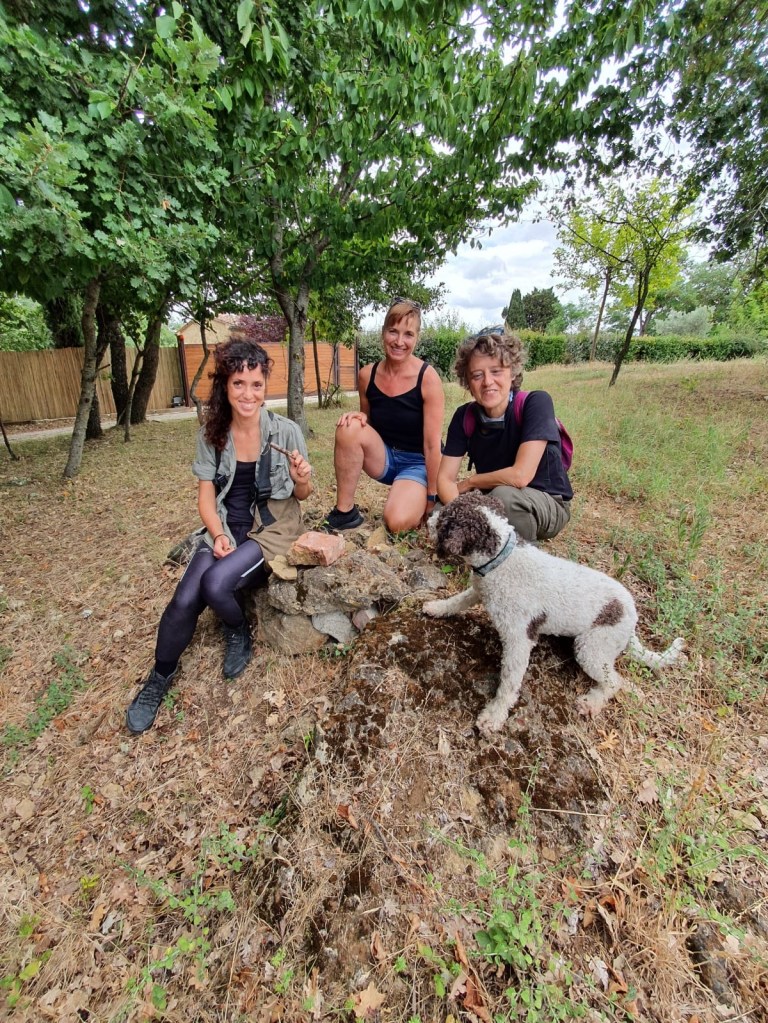
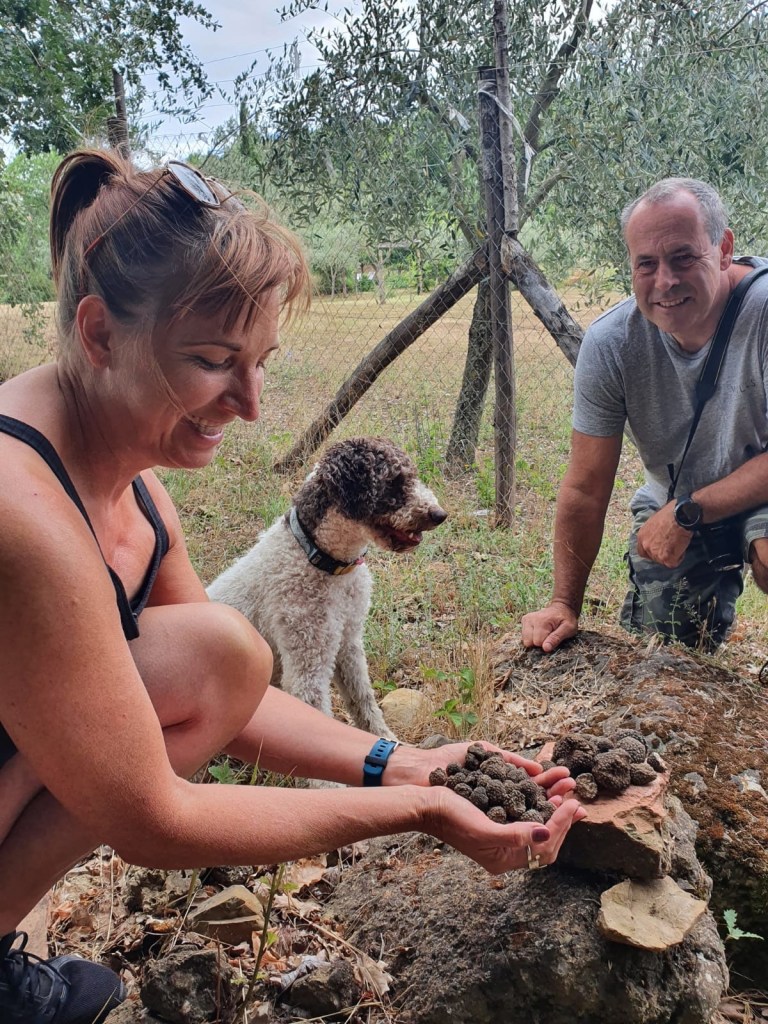
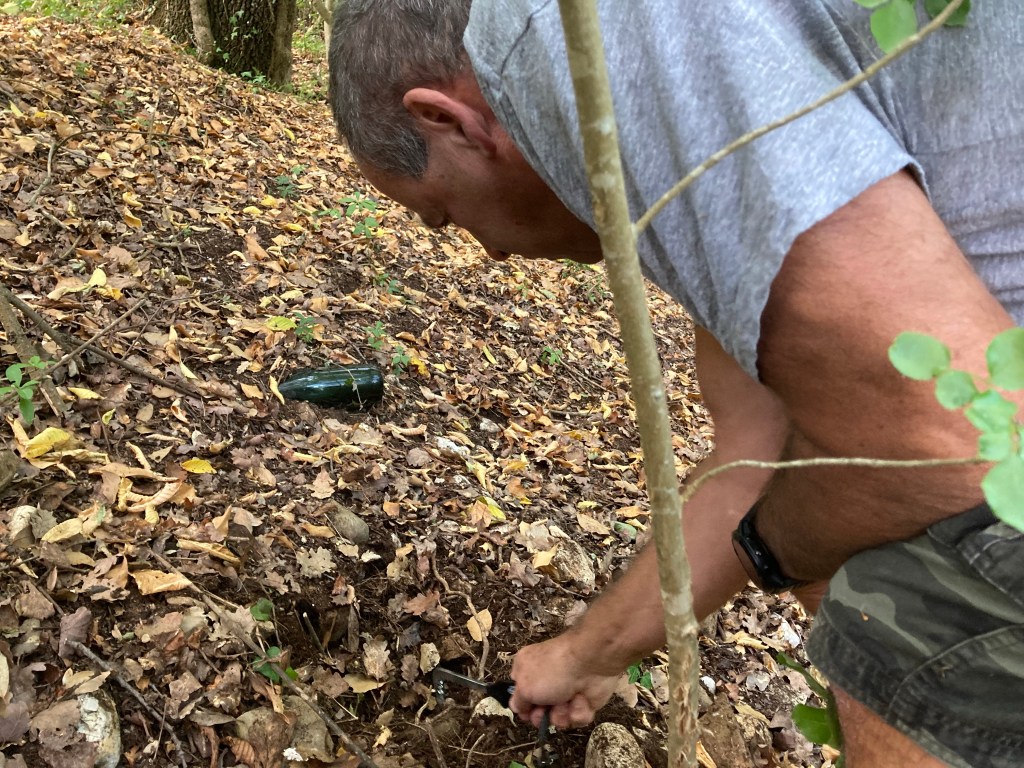
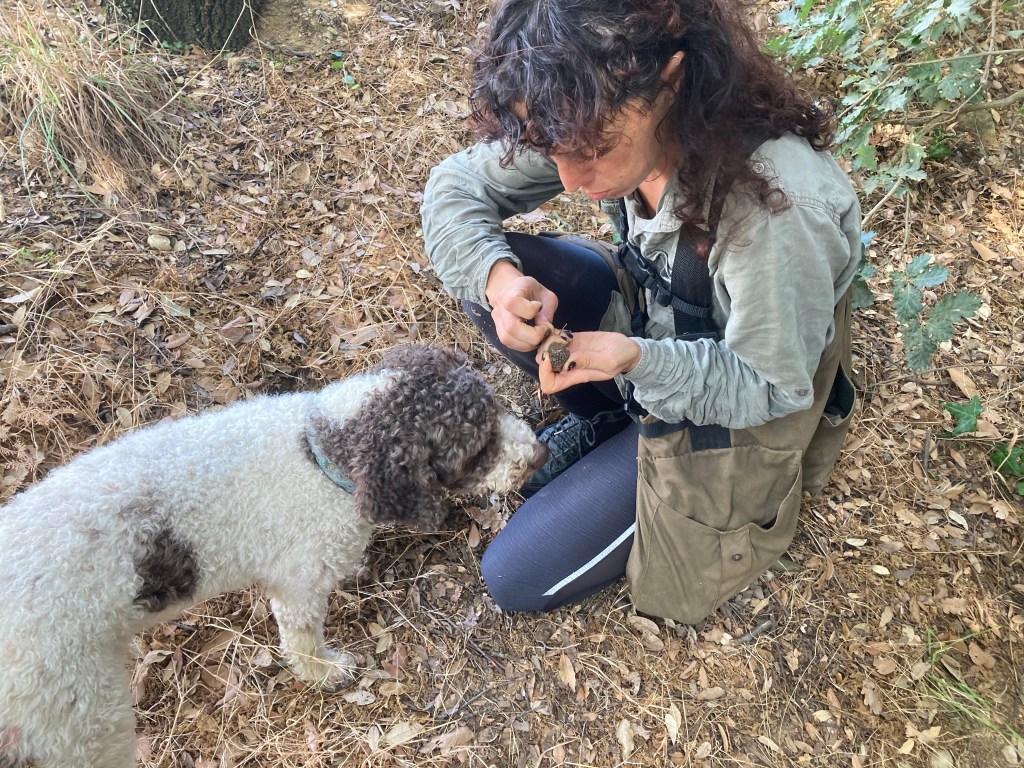
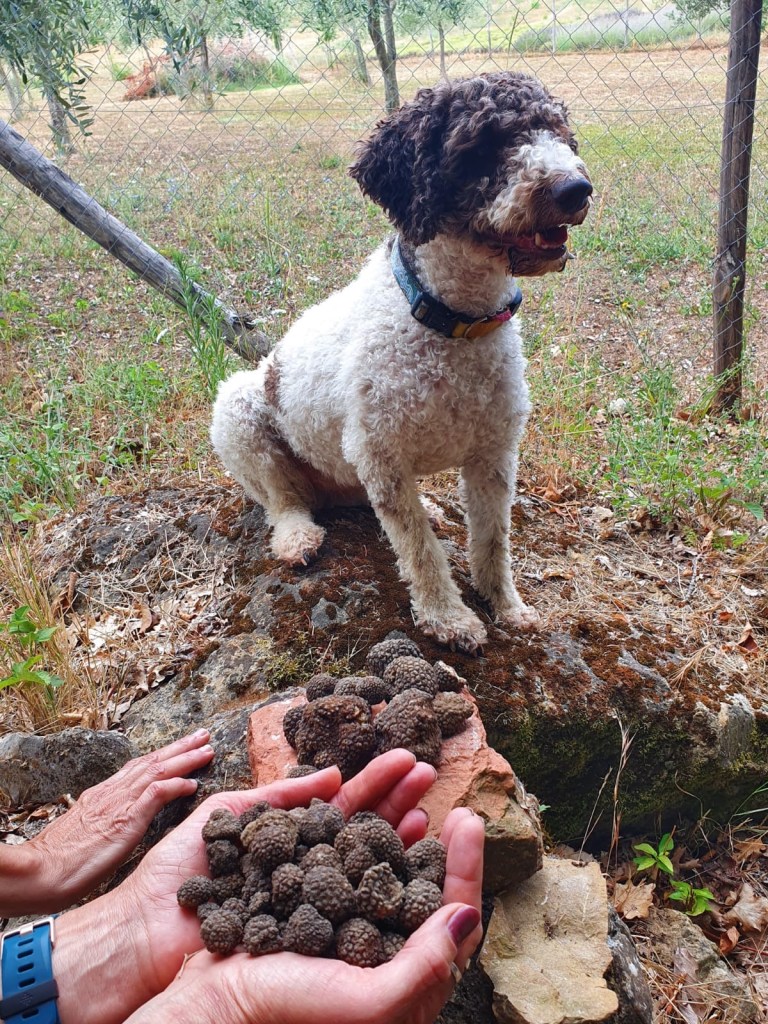
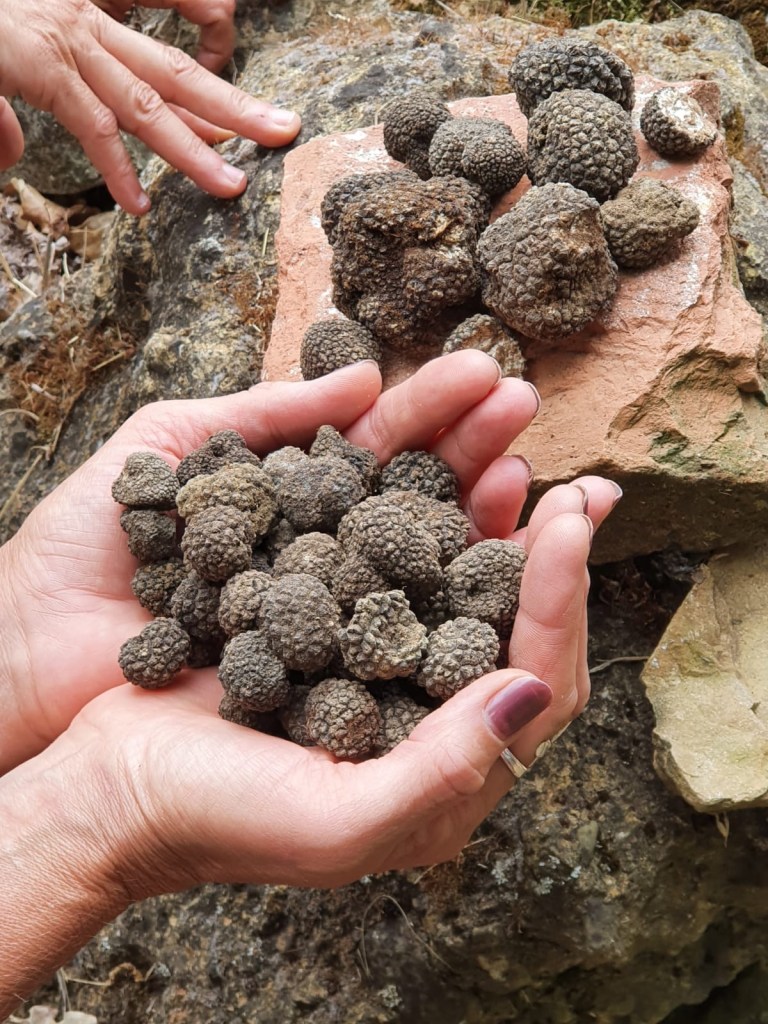
A few days later, off we went with Alessandra, Francesca, and her dog Olivia on a hunt. The truffles we looked for were the summer black ones. We were at the end of the season, which mainly runs from July to end of August, however Olivia did us proud and found us a number of truffles we were all proud of.
Below are some of the facts we picked up from our tour:
There are over 185 species of truffles with the white ones being the rarest most valuable species of truffle in the market. Truffles are expensive due to their rarity and short shelf life. Truffles are fungi and grow in harmony with a host tree and grow about 2 – 10 cm below the ground on the root of certain varieties of trees mainly Oak and Hazelnut. White truffles can be up to 1 metre below the ground! Truffles require and only thrive in highly specific environmental conditions therefore it is extremely difficult to re-create and establish this environment on a commercial basis and can take up to 7 years! The truffle aroma is deep earthly and musky and is a one-of-a-kind smell due to their being hundreds of aromatic compounds in a fresh truffle.
As truffles grow under the ground truffle hunters need to use dogs. Hunters need to obtain licenses as it is illegal to hunt without one. Since the reign of the Roman empire hunters used female pigs as the pigs are naturally attracted to the scent of a truffle because the fungi emit a scent similar to the sex pheromone of a male pig. However, the pigs love to eat the truffles they find and is the main reason why Italy banned the use of truffle pigs in 1985 and dogs are now only used.
Francesca took 3 years to train her dog and she has another one in training. Working dogs in the past used to be kennelled and only let out when working, this is not the case as the younger generation are coming through and the dogs are treated so much better and are friends of their masters, although concentrate and are obedient when working.
Truffles need to reproduce therefore it is a fine balance between the hunter and nature. As the truffles grow underground, they cannot use the rain and wind to spread their spores, therefore they rely on animals to reproduce. Truffles produce odours to attract animals such as wild boar, are eaten, and the spores scattered through the faeces. The hunter is careful not to disturb the earth around the truffle and if a truffle has spored will leave it in the ground.
As I mentioned above, the shelf life of a truffle is short and at their best should be consumed within 4-5 days and at most 2 weeks if stored correctly although the aroma and flavour will half in 5 days! They are 70% water and loose 2-3% moisture per day. We were advised to keep them in an airtight container wrapped in kitchen towel and kept in the fridge, checking daily, and replacing the kitchen towel. Alternatively, thinly slice and dry out in a dark place or use rock salt (useful as the rock salt will absorb the flavour of the truffle) or make a truffle paste which can then be stored and used over a few days. We were advised not to make truffle oil due to bacteria from the truffles fermenting (highly dangerous) but can make truffle butter and freeze it or store the truffles in a freezer, they will not be as fresh but can be stored for several months.
Recipes at the ready and 3 meals eaten, yum, some truffles finely sliced and drying out and a truffle paste made and needs eating over the next few days.
Altogether an enjoyable day, gaining knowledge, hunting, and now tasting the results of our efforts.
 Travel adventures